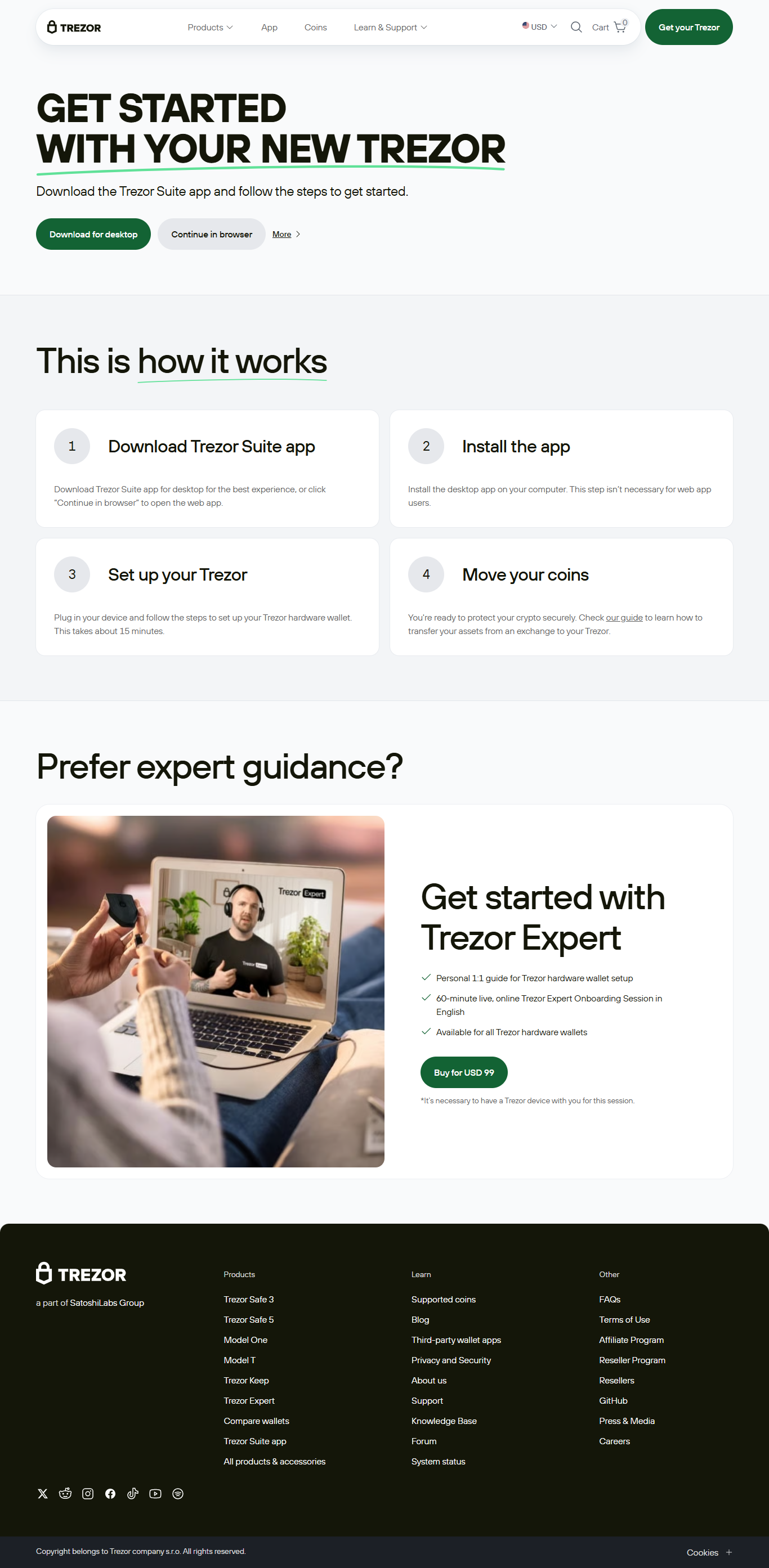
Trezor Bridge® — Connect Your Trezor to Web Browsers
In the world of cryptocurrency self-custody, secure communication between your hardware wallet and your computer is essential. Trezor Bridge® plays a critical role in the Trezor ecosystem by enabling your Trezor hardware wallet to connect safely with web browsers and web-based wallet interfaces. Without trezor bridge, browsers cannot reliably communicate with your device, making it impossible to manage crypto assets securely through web applications.
Whether you are using trezor suite, accessing the web version of Trezor services, or initializing your device via trezor.io/start, Trezor Bridge ensures encrypted, trusted communication while keeping your private keys fully offline. Understanding how trezor bridge works—and why it matters—is vital for anyone serious about crypto security.
Official source and setup instructions are always available at:
👉 https://trezor.io/start
What Is Trezor Bridge®?
Trezor Bridge® is an official background service developed by Trezor (SatoshiLabs) that allows web browsers to detect and communicate with your Trezor hardware wallet. Modern browsers have strict security limitations, which prevent them from directly accessing USB devices. Trezor Bridge solves this problem by acting as a secure intermediary.
In simple terms:
Your browser talks to trezor bridge
Trezor bridge talks to your Trezor device
Your private keys never leave the hardware wallet
This architecture ensures that even when using browser-based tools, your crypto remains protected by hardware-level security.
Why Trezor Bridge Is Essential
Without trezor bridge, web applications cannot recognize your Trezor device. This means:
The web version of trezor suite may not work
Transaction signing becomes impossible
Device setup via trezor.io/start may fail
Security confirmations cannot be verified on-device
By installing trezor bridge, you unlock full compatibility between your hardware wallet and supported browsers such as Chrome, Firefox, and Edge.
How Trezor Bridge Works
The functionality of trezor bridge is designed around security and simplicity:
Runs in the background
Once installed, trezor bridge runs quietly without interfering with other applications.Encrypted communication
All data sent between your browser and device is encrypted.No private key access
Trezor bridge never sees, stores, or transmits private keys.Device confirmation required
All sensitive actions must still be confirmed physically on the Trezor device.
This ensures that even if your computer is compromised, attackers cannot steal your funds without access to the physical wallet.
Trezor Bridge vs Trezor Suite
Many users confuse trezor bridge with trezor suite, but they serve different purposes.
Trezor Suite
Full wallet management application
Available as desktop app and web version
Used to send, receive, buy, sell, and manage crypto
Displays portfolio data and transaction history
Official page: https://trezor.io/trezor-suite
Trezor Bridge
Communication layer
Connects browsers to your Trezor device
Required for web-based interactions
Runs silently in the background
Both work together seamlessly, especially when starting setup at trezor.io/start.
When Do You Need Trezor Bridge?
You typically need trezor bridge in the following scenarios:
Using Trezor Suite Web instead of the desktop app
Initializing or recovering a device via trezor.io/start
Accessing third-party web wallets that support Trezor
Your browser cannot detect the device
If you’re using the desktop version of trezor suite, Bridge may already be bundled or required only for specific browser-based actions.
How to Install Trezor Bridge Safely
Step 1: Go to the Official Start Page
Always begin at the official setup page:
👉 https://trezor.io/start
This ensures you are not downloading fake or malicious software.
Step 2: Download Trezor Bridge
From trezor.io/start, you’ll be redirected to the correct trezor bridge download for your operating system (Windows, macOS, or Linux).
Never download trezor bridge from:
Ads
Random forums
File-sharing websites
Step 3: Install and Run
After installation:
Restart your browser
Plug in your Trezor device
Open trezor suite or a supported web wallet
Your device should now be detected automatically.
Trezor Bridge and Device Initialization
During first-time setup, trezor.io/start may require both trezor suite and trezor bridge. This process includes:
Firmware verification
Device authenticity checks
Recovery seed generation
PIN setup
Trezor Bridge ensures the browser can securely send setup commands while confirmations remain on the device itself.
Security Architecture of Trezor Bridge
Security is the foundation of trezor bridge. Key design principles include:
Local-only operation (no cloud dependency)
Open-source transparency
Strict permission controls
Hardware-enforced confirmation
Even if malware is present on your system, it cannot bypass the physical confirmation required on your Trezor device.
Common Trezor Bridge Issues and Fixes
Device Not Detected
Ensure trezor bridge is installed
Restart browser and reconnect device
Try a different USB cable or port
Browser Compatibility Issues
Use supported browsers (Chrome, Firefox, Edge)
Disable conflicting wallet extensions
Update your browser
Outdated Bridge Version
Revisit trezor.io/start
Download the latest trezor bridge version
Most issues are resolved simply by reinstalling trezor bridge from the official site.
Why You Should Avoid Fake Trezor Bridge Downloads
Attackers often create fake trezor bridge installers designed to steal recovery seeds or trick users into approving malicious transactions. These scams usually appear via:
Sponsored search ads
Fake “support” emails
Look-alike websites
Golden rule:
If it’s not from trezor.io/start or the official Trezor website, don’t trust it.
Trezor Bridge in the Broader Trezor Ecosystem
Together, trezor bridge, trezor suite, and trezor.io/start form a complete security framework:
trezor.io/start → official entry point
trezor suite → wallet management interface
trezor bridge → secure browser communication
This layered approach minimizes attack surfaces while maximizing usability.
Final Thought
Trezor Bridge® may operate quietly in the background, but its role in crypto security is anything but small. By enabling secure communication between your Trezor hardware wallet and web browsers, trezor bridge ensures that convenience never comes at the cost of safety. When combined with trezor suite and proper setup through trezor.io/start, it delivers a trusted, battle-tested environment for managing digital assets.
If you care about true self-custody, transparency, and hardware-level protection, installing trezor bridge from the official source is non-negotiable.
Frequently Asked Questions (FAQ)
Q1: What is Trezor Bridge used for?
A: Trezor Bridge allows web browsers to securely communicate with your Trezor hardware wallet.
Q2: Is Trezor Bridge the same as Trezor Suite?
A: No. Trezor Suite is the wallet interface, while Trezor Bridge is the communication service.
Q3: Do I need Trezor Bridge for the desktop Trezor Suite?
A: Not always, but it is required for browser-based interactions and web apps.
Q4: Where can I download Trezor Bridge safely?
A: Only from the official site via https://trezor.io/start.
Q5: Does Trezor Bridge store private keys?
A: No. Private keys never leave the hardware wallet.
Q6: What browsers support Trezor Bridge?
A: Chrome, Firefox, Edge, and other Chromium-based browsers.
Q7: What should I do if my browser doesn’t detect my Trezor?
A: Reinstall trezor bridge from trezor.io/start and restart your browser.